Slate roof patterns for Twin Cities homes can shape how a roof complements the architecture and character of a property. Pattern choices influence visual rhythm, color distribution, roofline emphasis, and how individual slate courses appear from the street. These details can be especially noticeable on established homes throughout Eagan, Eden Prairie, and Stillwater.
Choosing a pattern also requires more than selecting an appealing arrangement from a photograph. Roof shape, slope, existing architecture, material characteristics, and installation details can influence whether a pattern works with the home.
Understanding these factors helps homeowners evaluate slate roof design ideas with both appearance and long-term performance in mind.
Key Takeaways
- Slate patterns can emphasize rooflines, architectural details, color variation, and overall home character.
- Home architecture should guide pattern complexity, scale, color placement, and visual balance.
- Roof slope and geometry can affect how individual slate patterns appear after installation.
- Minnesota weather makes proper roofing details as important as the selected visual pattern.
Choosing Slate Patterns That Complement Twin Cities Home Styles
Different types of slate roof patterns can create subtle or dramatic changes in how a home appears. Each pattern creates a different visual rhythm that can complement particular rooflines, proportions, and architectural details. These five pattern approaches show how slate can add character to homes throughout Eagan, Eden Prairie, and Stillwater.
Standard Slate Patterns Create a Clean, Traditional Look
Highly detailed roofing can compete with homes that already feature prominent masonry, windows, trim, or architectural accents. A standard slate pattern uses evenly sized pieces and consistent courses to create a balanced, orderly roof surface. Its restrained appearance complements traditional home styles because the slate adds natural texture without introducing another dominant design element.
Homeowners can explore slate roofing for lasting character when considering how a traditional pattern could fit the home’s existing architecture.
Staggered Slate Patterns Add Texture and Movement
Broad roof surfaces can appear visually uniform when every slate edge follows the same repeating alignment. Staggered slate roof installation patterns vary the placement of slate edges to introduce movement without abandoning an organized layout. This approach works well on prominent roof planes because the staggered edges create texture that remains visible from the street.
For homeowners replacing an aging roof with a distinctive new system, the existing roof shape can help determine where this added texture works naturally.
Graduated Slate Patterns Emphasize Roof Proportions
Large or steep roof planes can benefit from a pattern that responds to the scale of the roof itself. Graduated patterns arrange slate sizes in a deliberate progression, traditionally placing larger pieces lower and smaller pieces higher on the roof. The changing scale creates visual depth because the pattern reinforces the roof’s height and overall proportions.
Homeowners planning a new roof installation in Eden Prairie can consider how roof dimensions affect the appearance of graduated courses.
Mixed-Width Slate Patterns Create a More Varied Rhythm
Uniform slate widths can produce a formal appearance that may feel too structured for homes with more varied architectural details. Mixed-width patterns combine different slate widths while maintaining organized courses across the roof surface. The changing widths create a less repetitive rhythm that can add individuality without relying on dramatic changes in color.
Homeowners reviewing roofing services for Eagan homeowners can consider how pattern scale relates to the home’s roofline and exterior proportions.
Mixed-Color Slate Patterns Bring Out Exterior Details
A single-color roof may not provide the variation desired for homes with layered masonry, siding, trim, or other exterior materials. Mixed-color patterns combine compatible slate tones to distribute subtle color changes across the roof instead of concentrating them in one area. This approach can connect the roof visually with surrounding finishes because selected tones can echo colors already present on the exterior.
Homeowners can visualize roofing choices with exterior design services when comparing slate colors with siding, masonry, windows, and trim.
Design Priorities Before Selecting Your Slate Roof Pattern
An attractive pattern still needs to work with the home’s roof structure, slope, materials, and surrounding exterior features. Slate roofing for Minnesota homes also requires attention to weather exposure and the conditions affecting the existing roof. These five priorities help connect pattern selection with practical roofing considerations before installation begins.
Evaluate the Existing Roof Before Selecting a Pattern
Existing deterioration can complicate design decisions when the roof’s current condition has not been clearly established. Homeowners can have their roof professionally inspected to identify visible damage, moisture concerns, and roofing conditions before selecting a pattern. This evaluation matters because the existing roof can influence the scope and practical requirements of a future roofing project.
Let Roof Geometry Guide Pattern Selection
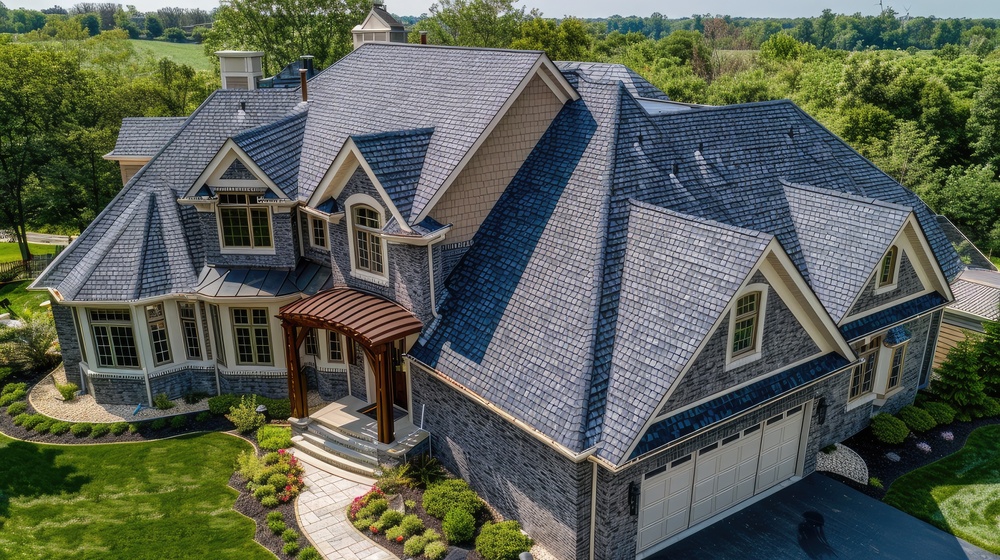
Complex roof shapes can make an intricate slate pattern appear crowded around valleys, hips, dormers, and other transitions. Selecting a pattern that responds to the roof’s actual geometry creates a more consistent appearance across both broad and confined surfaces. This approach matters because pattern proportions can look different when repeated across roof sections of varying sizes.
Consider How Roof Slope Changes the View
A pattern that looks prominent on a steep roof may appear less noticeable when installed on a lower visible slope. Evaluating the viewing angle helps homeowners understand how much of the pattern will actually be visible from surrounding areas. This perspective matters because roof pitch directly influences how strongly slate colors, courses, and pattern variations contribute to curb appeal.
Coordinate the Pattern With Exterior Materials
Slate patterns can feel disconnected when their colors and visual complexity compete with siding, masonry, trim, or other prominent finishes. Coordinating those elements creates a more unified exterior rather than treating the roof as an independent design decision. This balance matters because roofing and wall materials together establish much of a home’s visible architectural character.
Homeowners can explore slate roofing for lasting character while considering how roofing choices relate to the home’s complete exterior palette.
Account for Minnesota Weather in the Roof Design
A visually distinctive pattern cannot compensate for roofing details that are poorly suited to snow, moisture, and freeze-thaw conditions. Pattern planning should remain secondary to proper roof-system design, drainage, flashing, and other weather-related requirements. This priority matters because long-term performance remains essential regardless of how simple or elaborate the finished slate pattern appears.
Homeowners reviewing roofing solutions for Stillwater homes can consider design choices within the broader demands of Minnesota’s seasonal conditions.
Explore Slate Roofing Options in Eagan, Eden Prairie, and Stillwater
Slate patterns can give a roof distinctive character when the design works with the home’s architecture, roof geometry, and surrounding exterior materials. Krech Exteriors has served Twin Cities homeowners since 1988, providing roofing expertise grounded in craftsmanship and careful exterior planning.
A free estimate provides an opportunity to discuss the existing roof, design goals, and practical considerations affecting a roofing project. Homeowners can use that conversation to better understand how roofing choices may fit their property and long-term exterior plans.
Frequently Asked Questions
What are the most common types of slate roof patterns?
Common approaches include standard layouts, staggered arrangements, graduated patterns, and designs using controlled color variation. The appropriate pattern depends on roof geometry, architectural style, slate characteristics, and the visual effect desired for the home.
Do slate roof patterns affect roof performance?
The visual pattern is only one part of the roofing system. Roof slope, flashing, drainage, underlayment, structural conditions, and installation details remain important factors in how the completed roof performs through Minnesota’s changing seasons.
Which slate pattern works best for an older home?
There is no single pattern appropriate for every older home. Architectural style, roof shape, existing exterior materials, and the prominence of the roof should guide whether a restrained, varied, or more detailed pattern fits naturally.
Can slate roof patterns use more than one color?
Slate designs can incorporate color variation when compatible materials and an appropriate layout are used. The colors should relate naturally to the home’s siding, masonry, trim, and architecture so the finished roof remains visually cohesive.