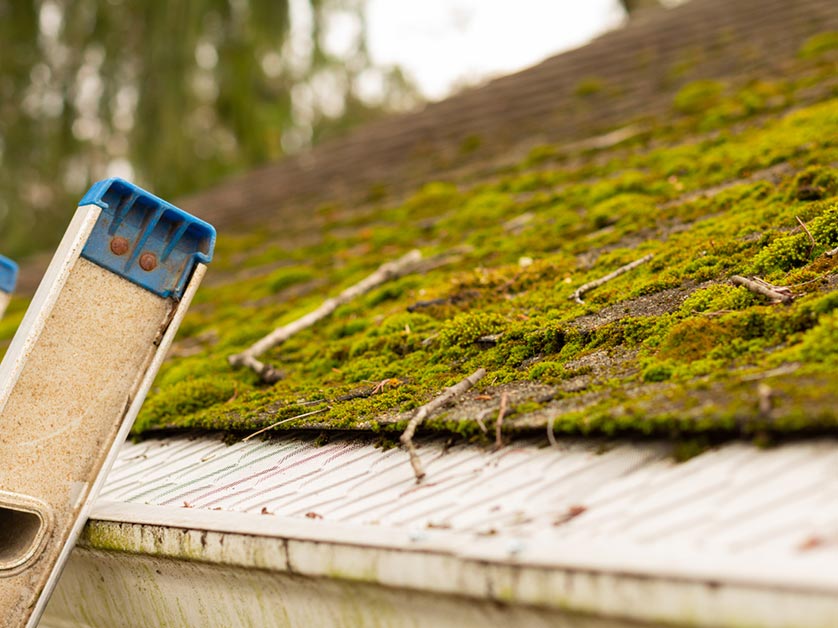
Moss on roof shingles often develops where shade, moisture, and organic debris keep asphalt roofing damp for extended periods. Homeowners researching how to remove moss from roof without damaging shingles need methods that control growth without creating additional surface wear.
Homes across the Twin Cities and Hudson experience seasonal moisture that can support moss growth. Careful removal protects the shingles underneath while making existing roofing deterioration easier to identify.
Key Takeaways
- Moss removal should loosen growth before physical cleaning begins on asphalt shingles.
- Gentle removal methods help preserve protective granules and reduce unnecessary shingle wear.
- Pressure washing and aggressive scraping can create additional damage during moss removal.
- Heavy moss can conceal lifted edges, granule loss, and deteriorated roofing materials.
Remove Moss Safely From Twin Cities and Hudson Shingles
Safe roof moss removal involves treating and loosening the growth before physically removing it from asphalt shingles. Aggressive scraping or high-pressure washing can damage the roofing surface while solving only the visible moss problem. A controlled process protects shingle granules and makes it easier to evaluate the roofing materials underneath.
This section explains the removal process from initial evaluation through careful cleanup.
Identify Moss and Check the Shingles Before Removal
Dark staining can resemble moss, while established moss typically develops visible growth that rises above the shingle surface. Confirming the growth and checking surrounding shingles helps identify deterioration that could make physical cleaning more damaging. This matters because safely removing moss from asphalt shingles depends in part on the condition of the underlying roofing materials.
If shingles already appear loose, brittle, curled, or heavily deteriorated, avoid disturbing them until their condition can be evaluated.
Apply a Shingle Safe Moss Treatment
Established moss can grip the textured surface and edges of asphalt shingles, making immediate physical removal difficult. A roof-appropriate moss treatment can kill the growth, causing it to loosen rather than require forceful removal. Understanding what kills moss on roof shingles matters because harsh chemicals can create different problems when they are unsuitable for roofing materials.
Homeowners should follow the treatment manufacturer’s directions and applicable shingle manufacturer guidance rather than improvising stronger chemical mixtures.
Let Treated Moss Loosen Before Physical Removal
Freshly treated moss may remain firmly attached, tempting homeowners to scrape or pull it away before it releases naturally. Allowing the treatment time to work helps loosen established growth and reduces the force needed during later removal. This waiting period matters because pulling firmly attached moss can disturb granules or already weathered areas of the shingle.
For roof moss removal in Minnesota properties, patience is especially useful when thick growth has developed across shaded roof sections.
Gently Clear Moss From the Shingle Surface
Loosened moss still requires careful handling because aggressive brushing or scraping can wear away protective granules from asphalt shingles. Gentle removal should follow the direction of the shingles instead of pushing upward against their exposed edges. This technique supports safe roof moss removal because it limits unnecessary stress on the roofing surface during physical cleaning.
The same approach applies to roof moss removal in Wisconsin homes around Hudson, where established growth may remain concentrated on shaded roof slopes.
Rinse and Clear Remaining Roof Debris Carefully
Loose moss, leaves, and organic debris can remain on the roof after treatment and continue holding moisture against the shingles. Gentle cleanup combined with routine roof maintenance can remove remaining material without relying on damaging high-pressure washing. Clearing debris matters because a cleaner surface dries more readily and makes future moss growth easier to notice.
Homeowners can also prevent moss from growing on roof surfaces by reducing persistent debris and moisture accumulation where practical.
Know When Moss Damage Needs A Closer Roof Inspection
Removing moss can uncover roofing conditions that were previously hidden beneath thick or established growth. Lifted shingles, missing granules, moisture-related deterioration, and weakened surfaces may become more apparent once the roof is clear. Recognizing these conditions helps determine whether moss removal solved the problem or exposed a separate roofing concern.
This section explains which conditions deserve closer attention after moss has been removed.
Check for Shingles Lifted Around Moss Growth
Established moss can grow around shingle edges and make raised or displaced roofing materials difficult to evaluate. Once the growth clears, having your roof professionally inspected can help determine whether affected shingles still lie and function as intended. This matters because lifted shingles can indicate a roofing condition that moss removal alone cannot correct.
Homeowners should avoid pressing raised shingles back into place before the affected materials and surrounding roof area have been evaluated.
Look for Granule Loss Beneath Heavy Moss
Thick moss can hide the asphalt shingle surface, preventing homeowners from seeing worn or unusually bare areas underneath. Comparing exposed shingles with nearby unaffected sections can reveal whether significant granule loss developed around the moss-covered area. This matters because protective surface deterioration can remain after every visible trace of moss has been removed.
Granule loss deserves closer attention when affected shingles look noticeably different from surrounding roofing materials.
Watch for Moisture-Related Roofing Deterioration
Persistent moss indicates that an area has remained damp enough to support biological growth over an extended period. After removal, staining or visible material deterioration can signal that the affected section deserves closer evaluation for moisture-related concerns. Determining whether moss has damaged the shingles requires examining their condition rather than assuming the presence of moss means damage has occurred.
Twin Cities and Hudson homeowners should pay particular attention when the same roof sections repeatedly remain damp or develop recurring growth.
Determine Whether Localized Shingle Damage Can Be Repaired
A few damaged shingles do not necessarily indicate that an otherwise serviceable roofing system requires complete replacement. When deterioration remains isolated, repairing shingles damaged by moisture or moss may address the affected materials while leaving sound shingles undisturbed. Determining the extent matters because repair decisions should reflect actual roofing damage rather than how much moss was previously visible.
A closer evaluation can establish whether deterioration is confined to several shingles or extends across a larger roof section.
Recognize When Shingles Are Too Deteriorated to Preserve
Removing widespread moss can sometimes expose shingles that are brittle, curled, heavily worn, or deteriorated across substantial roof areas. In these situations, replacing shingles that are too deteriorated to preserve may be more appropriate than repeatedly addressing individual damaged sections. This distinction matters because removing moss cannot restore asphalt shingles that have already experienced significant material deterioration.
The condition and distribution of damaged shingles should guide the next step rather than the presence of moss by itself.
Get Clear Answers About Roof Moss in the Twin Cities and Hudson
If moss removal exposes damaged or questionable shingles, a free estimate can help clarify the condition of the affected roofing materials. Krech Exteriors serves homeowners across the Twin Cities and Hudson area with roofing inspection, maintenance, repair, and replacement services.
Contact Krech Exteriors to discuss persistent moss, damaged shingles, or roofing conditions uncovered during moss removal. A professional evaluation can help determine whether the affected areas need continued monitoring, targeted repair, or replacement.
Frequently Asked Questions
Does moss damage roof shingles?
Moss can retain moisture around shingles and grow along their edges, but the extent of damage depends on roof condition and growth severity. Removing moss allows the underlying shingles to be examined for deterioration.
What kills moss on roof shingles?
Roof-compatible moss treatments are intended to kill established growth so it can loosen from the roofing surface. Follow product directions and applicable shingle manufacturer guidance because unsuitable chemicals can create unnecessary risks for roofing materials.
Can I pressure wash moss from asphalt shingles?
High-pressure washing can disturb protective granules and place unnecessary force on asphalt shingles. Treating the moss first and using a gentler removal process reduces the need to force established growth from the roofing surface.
How can I prevent moss from growing on my roof?
Reduce moisture-holding debris and prolonged shade where practical, while keeping roof surfaces reasonably clear. Regular observation can also identify new moss growth before it becomes thick enough to conceal the condition of underlying shingles.